Undercurrent, p.1
Undercurrent, page 1


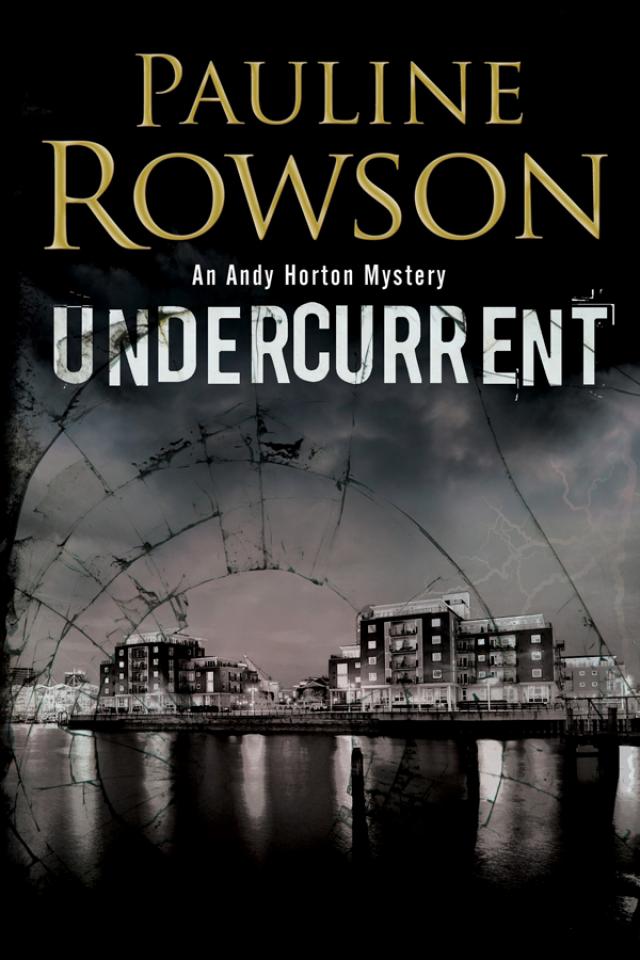
Table of Contents
Recent Titles by Pauline Rowson
Title Page
Copyright
Dedication
Acknowledgements
Chapter One
Chapter Two
Chapter Three
Chapter Four
Chapter Five
Chapter Six
Chapter Seven
Chapter Eight
Chapter Nine
Chapter Ten
Chapter Eleven
Chapter Twelve
Chapter Thirteen
Chapter Fourteen
Chapter Fifteen
Chapter Sixteen
Chapter Seventeen
Chapter Eighteen
Chapter Nineteen
Chapter Twenty
Chapter Twenty-One
Chapter Twenty-Two
Chapter Twenty-Three
Recent Titles by Pauline Rowson
TIDE OF DEATH
IN COLD DAYLIGHT
FOR THE KILL
DEADLY WATERS *
THE SUFFOCATING SEA *
DEAD MAN’S WHARF *
BLOOD ON THE SAND *
FOOTSTEPS ON THE SHORE *
A KILLING COAST *
DEATH LIES BENEATH *
UNDERCURRENT *
* available from Severn House
UNDERCURRENT
A DI Andy Horton Mystery
Pauline Rowson
This ebook is copyright material and must not be copied, reproduced, transferred, distributed, leased, licensed or publicly performed or used in any way except as specifically permitted in writing by the publishers, as allowed under the terms and conditions under which it was purchased or as strictly permitted by applicable copyright law. Any unauthorised distribution or use of this text may be a direct infringement of the author’s and publisher’s rights and those responsible may be liable in law accordingly.
First published in Great Britain and the USA 2013 by
SEVERN HOUSE PUBLISHERS LTD of
9 – 15 High Street, Sutton, Surrey, England, SM1 1DF.
eBook edition first published in 2013 by Severn House Digital
an imprint of Severn House Publishers Limited.
Copyright © 2013 by Pauline Rowson.
The right of Pauline Rowson to be identified as the author of this work has been asserted in accordance with the Copyright, Designs & Patents Act 1988.
British Library Cataloguing in Publication Data
Rowson, Pauline.
Undercurrent.
1. Horton, Andy (Fictitious character)–Fiction.
2. Police–England–Portsmouth–Fiction. 3. Murder–
Investigation–England–Portsmouth–Fiction.
4. Detective and mystery stories.
I. Title
823.9'2-dc23
ISBN-13: 978-0-7278-8268-4 (cased)
ISBN-13: 978-1-78010-398-3 (epub)
Except where actual historical events and characters are being described for the storyline of this novel, all situations in this publication are fictitious and any resemblance to living persons is purely coincidental.
This ebook produced by
Palimpsest Book Production Limited,
Falkirk, Stirlingshire, Scotland.
To Bob as always
ACKNOWLEDGEMENTS
With grateful thanks to Portsmouth Historic Dockyard and the National Museum of the Royal Navy (Portsmouth) and in particular to Rowannah Martin-Cottee and Heather Johnson for their patience and willingness to answer my numerous questions. Also my thanks to Dr Gordon Watson of the Institute of Marine Sciences, School of Biological Sciences, University of Portsmouth for his invaluable help.
ONE
Monday
The wailing police siren sliced through the rain-washed night. Horton quickly checked the mirrors of his Harley and dropped his speed but the police car sped past him on the motorway, heading towards Portsmouth city centre, its blue light pulsating like a homing beam for a lost alien. Swiftly he calculated the time. It had been eight when he’d been ejected from the London School of Economics Reading Room because it was closing. And it had been just after nine thirty when he’d left the nearby pub after a meal and two Diet Cokes, an hour from London say, the roads being relatively traffic-free, so it must be some time between ten thirty and eleven at the latest. About right for the drunks to start rolling out of the pubs looking for trouble. It wasn’t his concern. He was off duty until tomorrow morning when he’d probably return to find his desk in CID buckling under the weight of his six-day absence.
It hadn’t been much of a holiday, he thought despondently, as he negotiated the roundabouts into the city centre. The one day he’d spent with his daughter had been the highlight of it, and even that had been tainted by the fact that Catherine, his estranged wife, had promised him two, but had yet again found an excuse to whisk Emma away. God only knew when he’d get to see her again.
He pulled up at the traffic lights trying not to feel disgruntled and frustrated. But the day he’d just spent searching an archive file for a clue as to the identity of six men in a photograph that he believed were somehow connected with the disappearance of his mother just over thirty years ago hadn’t helped to lighten his mood. His research had yielded nothing except stiff shoulders and bleary eyes. Maybe he was looking in the wrong place. He’d been convinced, however, that the date on the reverse of the picture, written in black ink – 13 March 1967 – was linked to the sit-in protest by students at the London School of Economics. There was nothing else significant about that day that he could find. But perhaps the date meant nothing. The photograph could have been taken anywhere. There was also nothing to indicate its location, no slogans, no buildings or scenery, just six men sitting on the floor, their arms linked around one another with a small group of people in the background. Even the clothes provided no clues as to the whereabouts and the occasion of the black and white snapshot, except that the men were wearing the fashions of the late 1960s and their haircuts and, in two cases, beards bore that out.
He squinted through the rain of his visor watching the police vehicle stop at the end of the road in front of the Hard. They’d probably been called to a fight at one of the pubs there. He should go home, but as the lights changed he found himself swinging right instead of heading straight ahead, home to his boat. He must be mad; the days when he needed to restrain drunken fighting yobs were over but he found himself rather relishing the prospect of getting stuck in. He needed a distraction from his maudlin thoughts and he needed activity to release some of the frustration he felt over yet another day wasted in the search for the truth behind his mother’s disappearance.
It was with a sense of disappointment then that he pulled in behind the police vehicle straddling the closed double wooden doors of the Historic Dockyard and silenced the Harley. There was no fight and no drunks; just PCs Bailey and Johnson talking to two security officers at the side gate. Removing his helmet Horton asked what was going on.
‘Suspicious death, sir,’ Johnson answered.
‘Inside?’ Horton asked, troubled as he dismounted.
The younger and stouter of the two security officers answered him. ‘We think it’s Dr Douglas Spalding. He gave a public lecture here tonight and he hasn’t signed out.’
Horton caught the brief exchange of glances between him and his colleague, a man in his mid-fifties, lean with a haggard face and nervous manner. It didn’t take a mind reader to see that someone had made a balls-up.
‘He’s in Number One Dock,’ the younger of the two security officers continued.
That meant nothing to Horton except that docks were very deep and sometimes full of water – or was that a basin? Perhaps they were one and the same thing. ‘He’s in the water?’ he asked, suppressing a shiver as he visualized the body floating face down in a dark, icy pool of stagnant water. He’d wished for action but not this kind. He hadn’t wanted anyone dead.
‘No, it’s a dry dock. The last one at the end of the Historic Dockyard before you hit Portsmouth Harbour.’
Horton wasn’t sure that conjured up a better picture. ‘You can confirm that he is dead?’
A worried expression crossed the security officer’s round face. ‘No, but I’ve seen enough dead men to know,’ he said somewhat defensively.
‘Ex army?’
‘Marines. And nobody falls from that height and gets up to tell the tale.’ Horton cocked a quizzical eyebrow. The security officer added, ‘The dock is nearly thirty feet deep.’
Then he was right; it was unlikely that Dr Spalding was still alive. He’d be a mess of blood and bone. But there was always a chance. ‘Have you called the fire service and paramedics?’
‘I’ve only just called you lot,’ he answered somewhat tetchily.
Horton swiftly gave instructions for PC Bailey to do both. The emergency services would enter the Historic Dockyard via the gate at the naval base entrance, which was nearer the city centre, and permanently manned with a security office. He told Bailey to stay with the police vehicle because they were already beginning to draw a crowd, despite the heavy rain, and Horton didn’t fancy anyone making off with his Harley or a police car. The security officer introduced himself as Neil Gideon and the tall, older, worried-looking man as Matt Newton. As Horton gave instructions for Newton to remain at the gate with Bailey and for Johnson to accompany him and Gideon, a blue Ford drew up behind Horton’s Harley and Sergeant Cantelli climbed out. His dark, lean-featured face registered surprise at seeing Horton.
‘Thought you were on holiday,’ he said, zapping the car locked.
‘I am.’
‘Yeah, can’t think of anywhere I’d rather be on a wet August night in a perishing wind than looking at a dead body.’
Horton gave a brief smile, introduced Neil Gideon and refused a piece of chewing gum from the packet Cantelli offered him. Swiftly he relayed to Cantelli what Gideon had told him as they made their way down the wide and deserted thoroughfare of the Historic Dockyard. Raising his voice against the wind whistling between the ancient buildings and boathouses he said to Gideon, ‘Apart from Dr Spalding not signing out, why do you think it’s him?’
‘Can’t see who else it can be. Besides, the clothes match those Dr Spalding was wearing: navy jacket, khaki trousers.’
‘You saw him earlier this evening then?’
‘Yes. Before the lecture there was a drinks reception on board HMS Victory at seven.’ Gideon jerked his head at the illuminated three-masted flagship to their right. Hard to believe that it had been in active service until 1812, which included her most famous moment, the Battle of Trafalgar in 1805, thought Horton admiringly as Gideon continued. ‘I walked Dr Spalding and his guests over to the National Museum of the Royal Navy at seven thirty.’ He waved his torch at the long three-storey brick building on their left. ‘That’s where the lecture was held.’
‘And it finished when?’
‘Not sure of the exact time, you’ll need to check that with Julie Preston, the event organizer, but she was the last to leave the museum at ten minutes past ten. I walked her to her car, which was parked in the street just before you get to HMS Victory, and she drove out by way of the naval base exit at Unicorn Gate. It was only when I returned to the side gate at the Victory entrance that I checked the log and saw that one of the other guest’s signatures had sprawled over two lines.’
‘Who was on the gate when that happened?’
‘Newton. He claimed he didn’t notice it. I thought that either Spalding had slipped through without signing out—’
‘Not very good security.’
‘No, or that he was still on site. Newton couldn’t remember seeing him but then he wasn’t on duty when Dr Spalding arrived and neither was I, but as I said I walked his party across to the museum. I returned here and began to look around thinking that maybe Spalding had been taken ill. I found him in the dock.’
They drew up in front of a waist-high, yellow steel re-enforced mesh fence that completely encircled the oblong gaping concrete hole. Peering down into the gloomy depths Horton saw a very old grey and white naval vessel well over 170 feet long.
‘It’s a Monitor,’ Gideon explained. ‘Built in 1915.’
That didn’t mean a lot to Horton but he nodded knowingly. Quickly he surveyed the area. To his left the dock gave on to the narrow entrance into Portsmouth Harbour and beyond it he could see the lights in the tower blocks of Gosport blinking in the slanting rain. To his right and slightly behind them was HMS Victory and straight ahead, across the other side of the dock and an expanse of quayside, Portsmouth Harbour broadened out west towards Fareham. The rain was barrelling off the sea.
Gideon said, ‘He’s lying at the port bow.’
Cantelli looked blank. Horton explained. ‘The front of the ship on the left-hand side.’ Which was why they couldn’t see the body from where they were standing.
They headed towards it, walking around the dock. As they went Horton studied the strong yellow fence. ‘Doesn’t look as though it’s been breached,’ he said to Cantelli.
‘And the gate’s still intact.’
Horton noted that the bolt across the gate in the corner was secure. There was another gate in the corresponding corner of the dock with which they now drew level. That too hadn’t been tampered with. Cantelli rattled it. ‘Locked. Do you have a key?’ he asked Gideon.
‘No.’
Horton stared into the gloom. He could see why Gideon hadn’t risked climbing down. With only the light of a torch the security officer might have fallen on the steep and slippery concrete steps and injured or possibly killed himself. Horton would have thought that Gideon, as a former marine, might have taken the risk, foolish though it might have been, if there was a slim chance of saving the man’s life. Horton himself would have done so and he was no ex-marine. Perhaps Gideon considered it was more than his job’s worth now that he was a civilian.
The rain seemed colder and more vicious here, sweeping off the sea behind them. As if to echo his thoughts Cantelli stamped his feet and rammed his hands deeper into the pockets of his rain jacket. Gideon’s torch picked out the recumbent figure. It was lying face down, sprawled out. Horton tensed at the grisly sight but before he could comment the sound of vehicles approaching drew his attention and he looked up to see a fire engine and behind it the yellow and green paramedic’s car. Within minutes the fire fighters had the dock bathed in light and the lock on the gate had been cut.
‘Fancy a trip?’ one of them asked Horton.
He didn’t; he hated confined spaces, and although the dock was large and there was no possibility of him being locked in, it was also very deep and the steep concrete walls would give it the illusion of being closed in. He steeled himself to keep a lid on the panic that usually accompanied his phobia. He had no choice. He wouldn’t duck out of doing his job.
‘Do you need me?’ Gideon asked, clearly not keen himself – perhaps he also suffered from cleithrophobia.
‘Not much point,’ Horton answered, noting Gideon’s relief. ‘I doubt you’ll be able to identify him from his face.’ It was going to be a mess. Cantelli’s increasingly active gum-chewing signalled to Horton that he was preparing himself to view the shattered and broken body but he sensed no heightening of tension in the fireman or the paramedic. Horton knew they had their own way of dealing with this kind of thing and worse. Even before they reached the bottom it was clear to Horton that Gideon was right; the man was clearly dead. A pool of purple blood had seeped out from under the head. A bloodshot eye on the right hand side of the face stared sightlessly up at them in a deathly grey face. Horton couldn’t see the left hand side of the face but he knew it would be a bruised and bloody mess. The body was intact though, the right arm exposed and stretched out slightly to the side, the left arm lay crumpled under the body, the legs straddled unevenly, no bones protruding. The paramedic confirmed life extinct. Horton asked how long.
‘A couple of hours, possibly less. Do you want to me check his pockets?’
That was a task Horton was only too willing to delegate. ‘The ones that are exposed, yes.’ He didn’t want the body moved until after the police doctor had seen him and photographs had been taken.
The jacket pocket was empty but the back trouser pocket revealed a wallet. Foolish place to keep it, thought Horton, taking it from the paramedic. Ideal for pickpockets, but theft was clearly not a motive here. Inside he found a credit and debit card in the name of Dr Douglas Spalding, forty pounds, a driving licence and a pass for Portsmouth University. There was also a photograph of an attractive dark-haired woman of about thirty-five with two young children, a boy of about ten and a girl of about seven or eight, the same age as his own daughter, Emma. Horton’s heart constricted at the memory of the day they’d spent together sailing. It had gone too quickly. He handed the picture to Cantelli, turning his thoughts to the dead man’s two children who would never see their father again, thinking grimly that he hadn’t even known his. Cantelli shook his head sadly, no doubt thinking of his wife, Charlotte, and their five children and how they would feel if anything happened to him.
Horton thanked the paramedic and sent him on his way. His job was to help save the living, not linger over the dead. He instructed the fireman to cover the body with a tarpaulin and await further instructions. Glancing around the dock he felt relieved that the area where they were standing was bathed in light but the dark shadows further to his right seemed to be creeping closer as he glanced at them, sending his heart into overdrive and threatening to overpower him with memories of being locked in a dark, dank, decaying place in one of those God-awful children’s homes. He snatched his head away and forced himself not to look up at the walls; instead he scoured the area around the body, but couldn’t see anything that looked as though it shouldn’t be there, except the body, and certainly no murder weapon. Not that he thought this was homicide – or did he?