

The lucky ones, p.1
The Lucky Ones, page 1
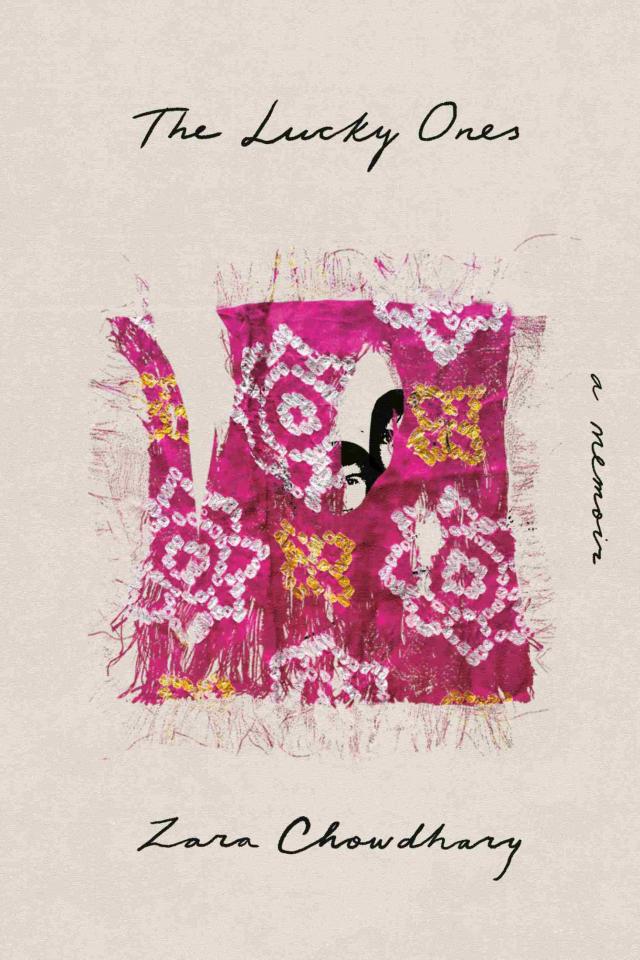


Copyright © 2024 by Zara Chowdhary
All rights reserved.
Published in the United States by Crown, an imprint of the Crown Publishing Group, a division of Penguin Random House LLC, New York.
Crown and the Crown colophon are registered trademarks of Penguin Random House LLC.
Library of Congress Cataloging-in-Publication Data
Names: Chowdhary, Zara Zaheer, 1986- author.
Title: The lucky ones : a memoir / Zara Zaheer Chowdhary. Identifiers: LCCN 2023057338 (print) | LCCN 2023057339 (ebook) | ISBN 9780593727430 (hardback ; acid-free paper) | ISBN 9780593727447 (Ebook) Subjects: LCSH: Chowdhary, Zara Zaheer, 1986—Childhood and youth. | Muslim women—India—Biography. | Sex discrimination against women—India. | Muslims—Violence against—India. | Massacre survivors—India—Biography. | College teachers—United States—Biography. Classification: LCC HQ1170.C497 A3 2024 (print) | LCC HQ1170.C497 (ebook) | DDC 305.48/6970954--dc23/eng/20231227
LC record available at https://lccn.loc.gov/2023057338
LC ebook record available at https://lccn.loc.gov/2023057339
Hardback ISBN 9780593727430
Ebook ISBN 9780593727447
crownpublishing.com
ep_prh_7.0_147498688_c0_r0
Contents
Dedication
On February Twenty-seventh
Prologue
Fire
Threads
Flowers
Air
Water
The Lucky Ones—an Epilogue
Acknowledgments
Bibliography
About the Author
The Lucky Ones Discussion Questions
_147498688_
For Sufi, so you may know the land you come from and its infinite love.
And for Amma, who is that infinite love made human.
On February Twenty-seventh
in 837 C.E., Halley’s comet is recorded on its fifteenth passage. It is a perihelion one, which means at this point in its orbit, it is closest to the sun, the oldest raging fire we know. Humans see the flying rock, from as close as humanly possible, streak across their sky. This riotous universe holds them in awe.
in 1803, the Great Fire of Bombay devastates hundreds of homes and buildings of this densely populated port city. When the flames die, the British begin to rebuild a Bombay in their own image, as those in power always do.
in 1921, Fascist Party workers in Italy clash with Italian communists. Later they destroy trade union centers and burn down the socialist newspaper Avanti! Ink and paper turn to ash. Hate and othering fill the air.
in 1933, the Reichstag burns down in a deadly blaze. Nazis blame the communists. A national emergency is declared. Soon after, the first labor camp opens.
in 2002, two train carriages light on fire outside a small rural railway station in the Indian state of Gujarat, killing dozens of people. The head of the state, the chief minister, calls the burning an “act of terror,” code since 9/11 for something the Muslims must have done. A state of mourning is declared. Three weeks later more than two thousand Muslims have been killed in response. The largest massacre in the history of independent India begins and ends in fire.
Prologue
On February 27, 2002
At 7:00 p.m., Amma has been missing for two hours. Papa paces the living room. He stops short of the dining table, turns around, and involuntarily ducks under Dadi’s precious crystal chandelier, missing its sharp spikes.
He walks out through the French windows onto the balcony and peers over the parapet, down eight floors. The street is lined with cars and scooters, and Papa’s eyes search for the slightest movement between them, a bird scouring for a worm. She isn’t there.
He bites out the words “Careless. Lying. Always lying,” and back he marches into the living room, ignoring my younger sister, Misba, and me. We sit, hands folded in our laps, by the telephone waiting for it to ring. It peals soon enough, echoes burning through our apartment. Papa swoops on the receiver.
“Walekum-as-salam! Kya? Haan curfew toh hoga. Allah sabka bhalaa kare.” And peace unto you. What? Oh no. Yes, a curfew is likely, then. Allah be kind.
If Papa is invoking Allah, it is safe to assume he is talking to Shah Sahab, our family priest, or pir.
Where is Amma?
The doorbell rings. Gulshan, our maid, rushes to open it; our eyes meet briefly. We share the same dread for Amma. We know what awaits inside. The bell isn’t Amma. Hussain Bhai, Jasmine Apartments’ liftman, stands in the doorway telling Papa that the neighbors are all moving their cars off-street. The Holiday Inn across from Jasmine is offering to let us move vehicles inside its gates. Hussain Bhai asks if Papa wants to move his new Hyundai Santro. Everyone in a one-mile radius around Jasmine has heard Papa boast about how it is the first car he’s bought in twenty years with his hard-earned savings, his khoon paise ki kamaai, a result of his blood, sweat, and tears. Everyone in a one-mile radius also laughs at how six months later he still hasn’t taken off the plastic covering from the seats. Hussain Bhai says someone might set fire to it if rioting starts.
Riot? What is going on? Where is Amma?
Papa and Dadi whisper to each other, which in and of itself is unusual. Something about a train on fire.
Where is Amma?
Papa grabs the car keys and leaves with Hussain Bhai. Dadi finally notices us sitting by the phone and turns to us. “Kahaan gayi hai tumhari Ma?” Where is your mother?
How would I know? I want to snap back, but that will only fuel her.
“Kuch bolti bhi nahin hai. Anney do. Aaj padegi usko Zaheer se.” She never informs us. Let her come back tonight. She’s going to get it from Zaheer. Or more like she will make sure Amma gets it. Dadi walks away muttering.
I leave Misba sitting there and walk to the majoos—this ornately carved antique chest filled with more of Dadi’s precious crystal ware and neatly arranged china. I hate her bloody majoos almost as much as I hate her when she speaks of Amma like that. Like vermin to be crushed under her chappals just because she’s bored.
Past the majoos, between its sharp edges and the wall, is a tiny corner where Amma stacks all our namaz items: soft cotton dupattas, velvety jaanemaaz mats. That corner has a worn, comforting scent I’ve otherwise smelled only in old hole-in-the-wall libraries where Amma takes me some evenings, where I spend hours scavenging for Famous Fives and she for tattered Danielle Steel romances. This corner smells of Amma. I pick up a jaanemaaz and go into Dadi’s room, where I’ve been sleeping with her on her large, low bed for the past two years, since her husband, our grandfather Dada, died. She hates the loneliness more than she hates me, I guess.
I wash my arms, my feet, rub water into my face and scalp. I lay down the jaanemaaz and step onto it, wrap the dupatta around my head, careful to cover every inch of my skin except my palms and fingers. Allah doesn’t mind seeing my fingers, I’m told. But can They see and hear my heart under all this cloth?
Where is my mother, Allah?
I stand, head bowed, hands folded across my chest, and start to pray. I can feel Dadi stop by the room, make a face, and walk away.
The muezzin cries out from the mosque behind our building as if sensing my urgency to start namaz today.
“Allah hu-akbar Allah…hu-akbar…”
When I was younger, and Indians had only the state-run Doordarshan channel, which syndicated a handful of foreign shows, I used to watch Hindi-dubbed Aladdin with almost religious zeal. When Amma first taught me how to read namaz, I couldn’t focus on the ritual, so while she chanted aloud in Arabic, a language I couldn’t understand, I would distract myself pretending the jaanemaaz was a flying carpet. I’d sway back and forth on my heels, mimicking Amma’s trance, but really in my head, I was steering, racing through the clouds, higher, lower, faster, away from any shadow that could catch me. Every time I passed by that musty corner near the majoos, I’d look at the jaanemaaz stack and smile to myself thinking here they were, these magical things, hiding in a dark corner of this darkness-filled apartment, my secret spaces of silence in a house full of noise and people always in each other’s business. Amma also unwittingly fueled this fantasy.
“Allah listens to the voices of innocent children before He listens to anyone else.” What other incentive does a child full of things to pray and plead for need, right?
* * *
—
Wave after wave of azaans blare from loudspeakers in all four directions; muezzins from six mosques chase one another. Papa jokes that five times a day the maulanas are participating in a talent competition, crying louder, hoarser, outshouting each other vying for our attention. Our neighborhood, Khanpur, doesn’t have fancy malls or restaurants, but we have something few others do: the burden of guilt if you don’t answer six separate, belligerent calls to prayer.
Today my ears strain for another sound, though. Through all the holy cacophony: the sound of Amma ringing the doorbell.
While my lips softly recite each Arabic word with blind devotion, my ears are pricked for the sound of the lift. Living in a forty-year-old apartment building with a groaning elevator system has trained our ears with a strange gift: the ability to tell which floor the lift car stops at and whether the doors are opening or closing based on which of the two metal grill doors clanks into place first. The rusty pulley system is somewhere
There she is. On the threshold of the apartment, hands laden with grocery bags. My amma.
“Bhabhi!” Gulshan hisses with urgency and rushes to help her with the bag. “Kidhar chale gaye the? Mummy aur Bhai ne toh dimaag khaa liya.” Where’d you disappear to? Your mother-in-law and husband chewed our brains out! She bursts into giggles as only Gulshan can in a moment of tension. I’ve learned this from her—a heart full of fear and a mouth full of mirth—I catch myself doing it even today, giggling when I’m most scared.
Gulshan is our first domestic worker to stick it out in a series of many who vanish within months, sometimes weeks, of dealing with Dadi. Gulshan has worked in apartment C-8 Jasmine for five years, carrying groceries with Amma, checking our heads for lice, kneading endless balls of dough, washing all our clothes and utensils, being bullied by Dadi and my aunt Phupu. All thanks to her only friend and ally in the house: Amma. After all, they are treated pretty much on par in this home. Gulshan truly relishes it whenever she can whinge about Dadi.
Amma hurries into the kitchen and unloads her armfuls of plastic bags. She’s speaking as quickly as her hands move. She went out at four saying she needed to pick up kadi patta-mirchi-dhania. Curry leaves, green chilies, and cilantro, which was code for “I need a minute to get away and breathe.” She walked down the building stairs to the pavement, took the long way around the block rather than cut through the narrow alleys in between the buildings. She went to the small bazaar in the chowk where vendors stand all day, lorries overflowing with seasonal vegetables and fruits, covered in equal parts mud and flies. She bought her herbs and was headed back to Jasmine feeling somewhat restored when on the front steps she ran into Nasheman auntie, her morning walk companion from the seventh floor, who told her the same thing Dadi and Papa had been whispering about. A train was set on fire in some town called Godhra. There was talk of a curfew. Amma turned right around and went back to the market, this time for everything else she would need if the shops stayed shut all week—milk, bread, eggs, onions, potatoes, meat, fish. Only this time, she found herself among frenzied, frantic neighbors, longer lines, an entire community hurrying to get back home before dark.
* * *
—
We hear the elevator doors open and shut again in the hallway. Papa, who had gone down to look for her, is returning. He stomps back into the apartment.
“Where is she?”
The four of us in the kitchen freeze. I peek outside to watch him ask Dadi, who is at the dining table reading her namaz on a chair with her bad knees and all. Because she is supposed to be deep in prayerful contemplation, she can’t speak, and surely cannot tattle, so she gestures toward the kitchen, her mouth still moving rapidly in Arabic. Amma doesn’t wait for the storm to find her. She rushes out to it instead.
“Zaheer, did you hear?”
At the sight of her, Papa seems to forget how furious he has been the past two hours.
“Yeah.” He slowly nods, distracted. “The train. They’re clamping down by seven thirty. How did you find out…” He trails off, walking into the living room. Amma follows him, eager to show him she brings more news, that her transgression of absence was worth it.
“And it wasn’t some random passenger train.”
Papa sits down in his favorite armchair, the one directly pointed at the TV. He pauses while he fumbles with the remote, also still in its plastic cover, and turns on the evening news. She continues.
“I heard downstairs. The people were karsevaks. They were coming back from Ayodhya, it seems.” Karsevaks are “civilian volunteers” who do the bidding of the right-wing party in the country. And they were headed back home from Ayodhya? The city in north-central India at the heart of the Hindu-Muslim conflict? This doesn’t sound good at all.
Amma looks at us where we are once again perched on the little cushion by the phone. She smiles at us quickly in a way only she can to reassure us, and turns back to Papa. “It might be bad this time, no?”
He doesn’t look at her as he carefully wipes the remote with the white sleeve of his spotless cotton kurta and gently blows any remaining dust off it. “Probably.” He shrugs. “I don’t know. This is all very new. We should be ready in case it’s a long curfew.”
Amma pulls out a dining table chair and sits next to him, gingerly touching his arm now that he doesn’t seem ready to blow.
“Yes, yes. That’s why I went back. I’ve got bread, eggs, milk, even mutton.”
He simply nods.
“Haan, good idea.” He switches from the English news, which doesn’t seem to have caught up yet, to the local Gujarati one. The screen fills up with flames.
We gather around him to watch.
Ayodhya, the Nightmare
On the morning of February 27, 2002, a train on its way from Ayodhya, a small city in north-central India, to my home state of Gujarat in the West stopped at a small, dusty station called Godhra. Travelers disembarked for snacks and chai; vendors climbed on board to sell their wares. No one really knows what happened next, but as the train tooted its horn and departed the station, the emergency brake was pulled. Two of the train’s carriages were on fire; their doors were locked from the inside. At least fifty-eight people died.
* * *
—
In Ayodhya, a Mughal-era mosque called the Babri Masjid had stood for five hundred years. At some point during the British Raj, an idea spread among radicalized Hindus that the mosque had been built over the bones of an old Hindu temple, perhaps even the very birthplace of Ram, a much-revered Hindu deity. Over the decades, demands grew to “return” the land to Hindus, even though its modern-day ownership lay with the Muslim Waqf Board, an administrative body that oversaw the care and maintenance of Indo-Islamic monuments. In 1992, a mob of more than a hundred thousand Hindu karsevaks stormed the ancient monument and tore it down. Religious violence broke across India in response. The right-wing party, the BJP, which had led the call for the mosque’s demolition, gained immense popularity after this moment. And each year after, groups of these karsevaks would travel to Ayodhya and protest at the demolition site. The hope was to pressure the Indian Supreme Court, which was hearing a suit on the ownership of the property, to hand over the property to them. Ten years after the mosque’s destruction, on February 27, 2002, one such group was returning to their homes in Gujarat on that train.
Theories abound: that a kerosene stove got knocked over; that a Muslim vendor on board got into an argument with the pilgrims; that there was a fight on the platform between a Muslim chai seller and the passengers. But on that day, local news agencies heavily controlled by the state rushed to call it an “Islamic terrorist attack.” The state’s chief minister, Narendra Modi, immediately declared it an “act of terror.” The next day raging Hindu mobs, comprising thousands of people, poured into Gujarat’s streets, in cities, villages, and towns, looting, raping, and burning alive the state’s Muslim citizens.
The massacre continued for three months.
Ayodhya, the Dream
Every two years our father, Papa, a Gujarat state government employee, would get free tickets to take his family anywhere he wished within the country’s vast and mind-boggling train system. Every two years, Papa would use these free tickets to take us to only one place: Ayodhya.
This Ayodhya was not the small, dusty town in north-central India that lay at the heart of the “Hindu-Muslim problem.” Our Ayodhya was a home; a beautiful redbrick, three-story home fragrant with jasmine blossoms and filter coffee. A home for which we sat in a train for thirty-six hours, crossed five states, and traveled fifteen hundred kilometers south. A home that welcomed us with open arms and belonged to Papa’s friends from his time in the United States as a student. Ila auntie and her brother had met Papa in California in 1975 when they all landed in the same graduate program. Now their children, pets, and extended families filled the redbrick home. And every two years this home would take us under its care. It became our most enduring memory of summer.






